
Perspectives
Why a Caregiver-Facing Gateway Might Be the Highest-Leverage Thing You Build
Most child welfare tech investment goes toward the case management system. A carefully scoped caregiver gateway may be the higher-leverage fix for the quieter failure point: people closest to the child being last to know.
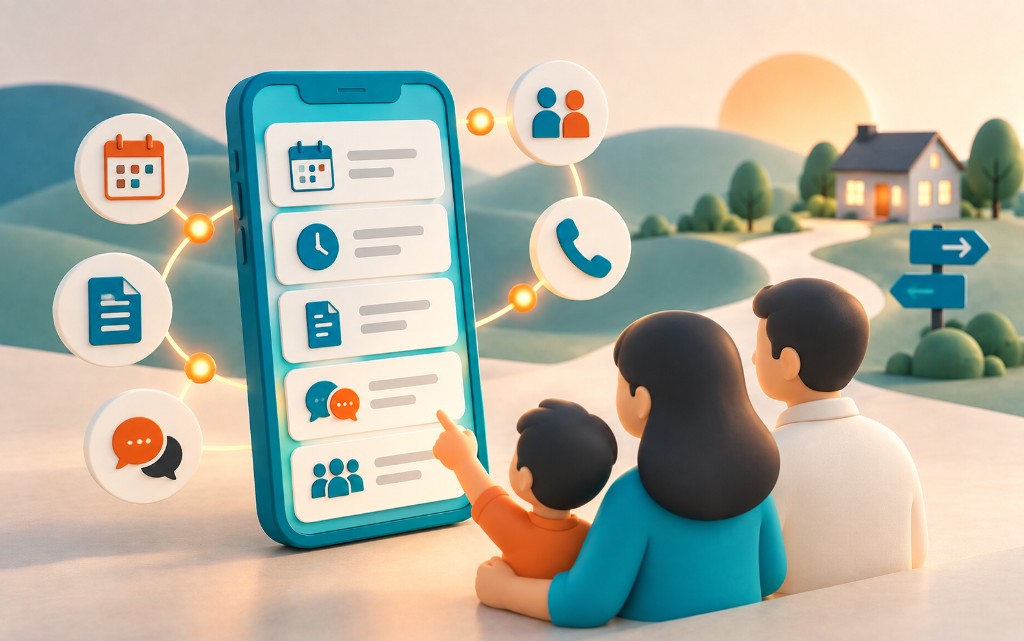
Most child welfare tech investment goes toward the case management system, and for good reason. That’s where the legal record lives. But there’s a quieter failure point in a lot of cases that no case management system ever fixes: the biological parent or caregiver who doesn’t know what’s happening next, doesn’t know who to call, and finds out about a placement change or a court date after the fact instead of before it.
That gap isn’t usually about anyone withholding information. It’s structural. Caseworkers are stretched thin, information lives in internal systems caregivers can’t see, and the update that would’ve mattered often gets communicated verbally, once, in a meeting the person may not have fully absorbed. Multiply that across a caseload and you get a system where the people closest to the child are frequently the last to know something changed.
A community-facing gateway is a narrow, deliberate fix for that gap. Not a portal into the case file. A carefully scoped surface where a caregiver or bio parent can see the specific, appropriate slice of information relevant to them: upcoming appointments, requested documents, a way to reach the right person, status on a request they submitted. The design discipline is entirely about what stays out. This isn’t a PHI dump or a mirror of the case record. It’s a bounded, consent-aware layer that shares exactly enough to keep someone informed and engaged, and nothing that creates risk or confusion.
The payoff shows up in the parts of a case that are hardest to manage well: transitions. A placement change, a visitation adjustment, a shift in who’s the point of contact. Those moments are where trust breaks down fastest, because they’re exactly when people feel least in control of information about their own child. A gateway that pushes the right update proactively, instead of requiring someone to track down a caseworker who’s juggling forty other cases, turns a stressful surprise into something the caregiver saw coming. That difference matters more than it sounds like it should. A caregiver who’s informed shows up prepared. A caregiver who’s blindsided shows up defensive, and defensive is where cooperation starts to erode.
The broader case for building this kind of tool isn’t really about self-service or reducing caseworker load, even though it does both. It’s about keeping everyone, the agency, the caregiver, the biological parent, oriented around the same set of facts at the same time. Cases don’t go sideways because people disagree about what’s best for a child. They go sideways because people are operating on different information at different moments. A well-scoped gateway closes that gap quietly, one update at a time, and that consistency is what actually improves outcomes for the kid at the center of it.
Ready to improve outcomes?
Talk with our team about how Stabilify software helps human services professionals deliver better results for kids in care, families receiving prevention services, and caregivers.